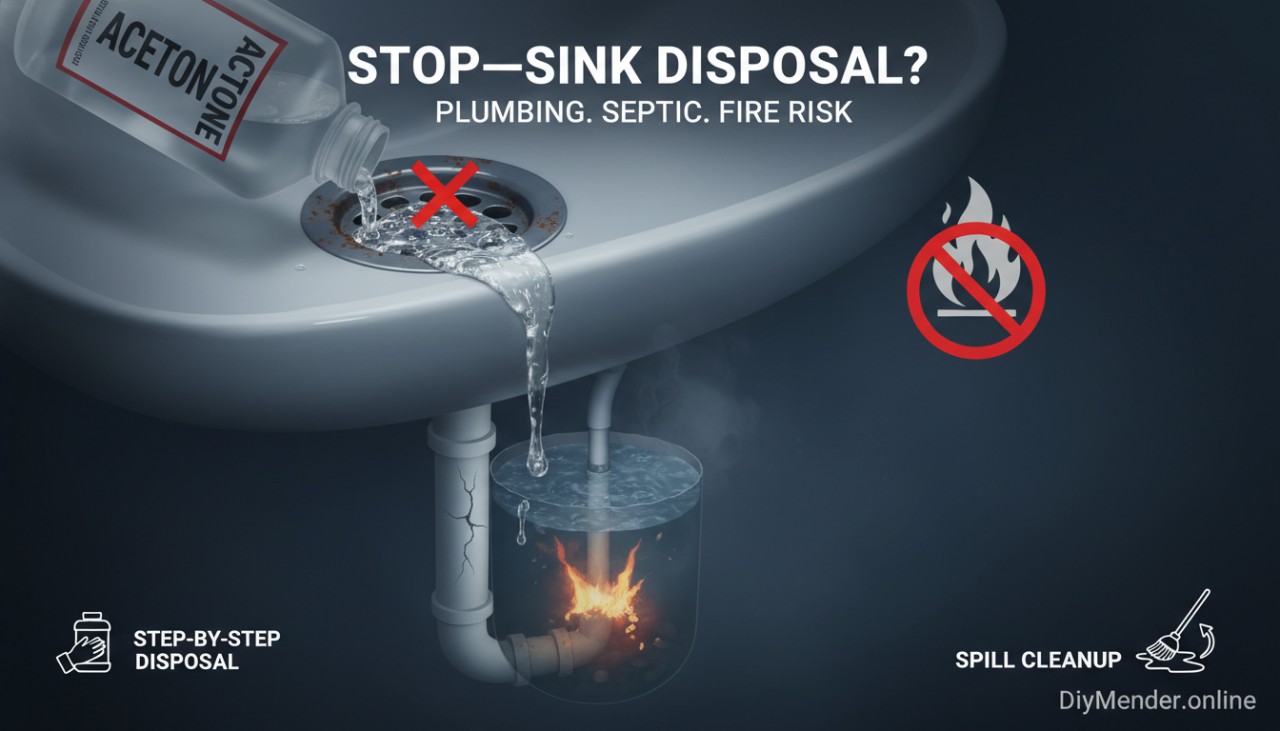
Short answer: no, you should not pour acetone down the sink. Whether it’s pure acetone from a DIY project or nail polish remover, it’s a highly flammable solvent that can damage plumbing parts, harm septic systems, and violate local disposal rules. I’ve seen people do it thinking “it’s just nail polish remover,” and then wonder why their trap seals started weeping or their bathroom smelled like a paint shop.
Why pouring acetone down the drain is a bad idea
Here’s the thing: acetone is more than a strong cleaner. It’s a volatile, flammable solvent with a super low flash point (about -4°F / -20°C). Dumping it in a drain introduces fire risk and can beat up parts of your plumbing you’d rather not replace.
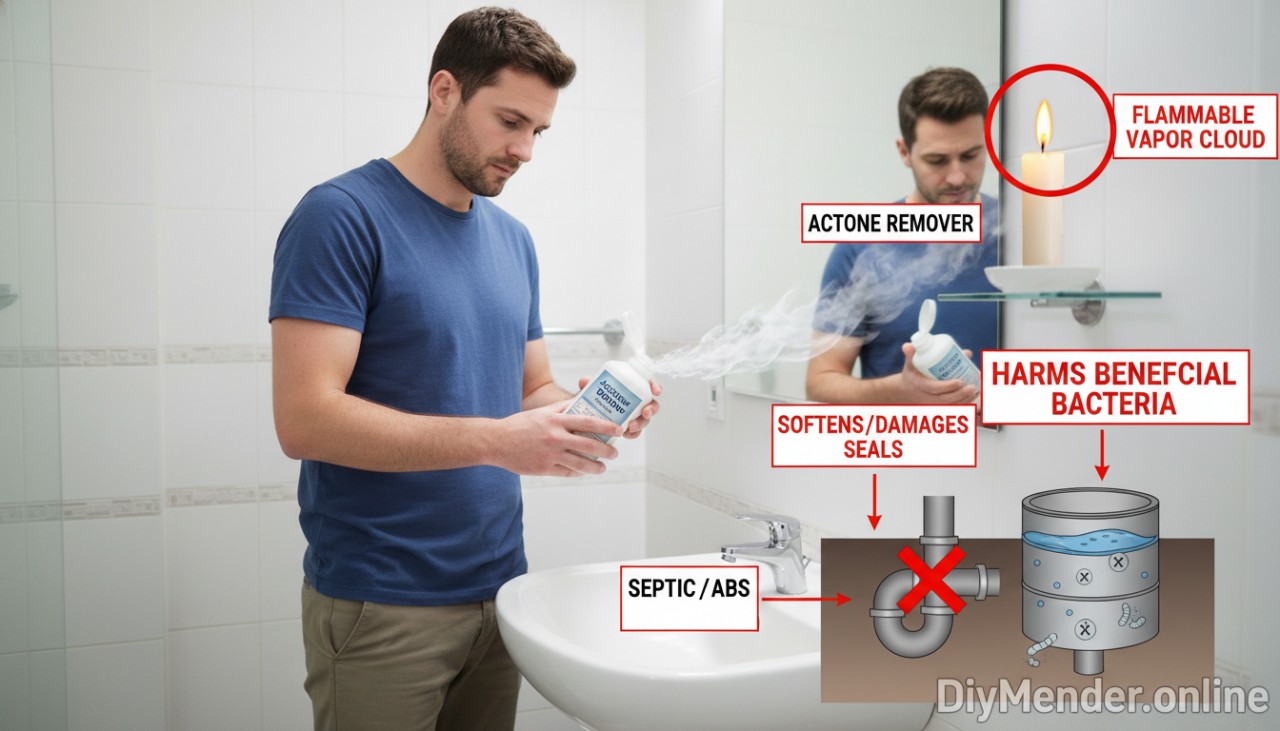
- Fire and vapor hazard: Acetone’s vapors can ignite easily (lower explosive limit ~2.6% in air). Pour it into a drain and those vapors can travel. Pilot lights, cigarettes, space heaters—bad combo.
- Plumbing damage: Acetone can soften or craze some plastics and rubber. It won’t “melt” PVC instantly, but it can attack ABS/PVC cements and rubber gaskets/O-rings in traps and fittings, especially with repeated exposure.
- Septic impact: If you’re on a septic system, solvents kill the bacteria your tank needs to function. Even small dumps can add up and cause costly problems later.
- Wastewater and rules: Many municipalities prohibit pouring flammable solvents down drains. Under federal rules (U.S.), acetone is an ignitable hazardous waste (D001) if discarded. Households have some exemptions, but local laws still apply—and utilities don’t appreciate surprise solvent loads.
What to do instead: safe, simple disposal options
If I were standing in your kitchen right now, I’d tell you this: keep the stuff contained and take it to household hazardous waste (HHW). It’s easier than you think.
For small amounts (nail polish remover, a few ounces)
- Use it up when possible. The safest “disposal” is to finish the bottle for its intended use, then recycle/throw away the empty per local rules.
- Cotton balls/pads: Let them dry completely outdoors on a non-combustible surface away from flames until there’s no odor, then bag and dispose in regular trash if your local rules allow. If your area prohibits evaporation or you’re unsure, treat them as hazardous waste.
- Leftover liquid: Keep it capped in the original container, label it, and take it to your HHW drop-off. Most counties host free events.
For DIY cleanup acetone (paint/finish work)
- Let solids settle: Pour used acetone into a glass or metal container with a tight lid. Let paint/varnish sludge settle out. Decant the clearer layer on top and reuse for rough cleaning. You’ll stretch your solvent and reduce waste.
- Store the rest safely: Keep “USED ACETONE — FLAMMABLE” in a sealed metal or solvent-rated container. Stash it in a cool, ventilated spot away from flames or sparks until your next HHW day.
For larger quantities
- Call your local HHW program or solid waste authority. They’ll tell you exactly how to package and drop it off. Don’t try to “get rid of it” down a drain or storm sewer—those fines aren’t fun.
If you already poured some down the sink
Don’t beat yourself up—just make it safe now. Open windows/doors to ventilate. Keep all flames and sparks off. Run plenty of cold water for several minutes to dilute what’s in the trap and line. Do not add bleach or other chemicals (bleach plus certain organics can form nasty byproducts). If you’re on a septic system, keep an eye out for odors or sluggish drains in the next days—if symptoms appear, call a septic pro.
Spill cleanup: do it right and avoid the stink
- Ventilate immediately: Windows open, fans blowing out, no flames.
- Absorb, don’t hose: Cover the spill with kitty litter, vermiculite, or solvent-absorbent pads. Scoop it into a metal can or thick plastic bag.
- Dispose as hazardous: Treat those absorbents like hazardous waste and take them to HHW. Don’t toss still-wet absorbents in the trash.
Common myths that cause problems
- “It mixes with water, so it’s fine.” Mixing isn’t the same as safe. It’s still flammable and harsh on seals.
- “It’s just nail polish remover.” Many removers are mostly acetone. Different label, same solvent risk.
- “My pipes are metal, so no problem.” You still have rubber gaskets, trap seals, and possibly plastic sections. Plus, vapor and fire risk don’t care what your pipes are made of.
- “It clears clogs.” No—acetone isn’t a drain cleaner. It can soften plastics and doesn’t reliably break down hair, soap scum, or mineral scale.
Quick dos and don’ts
- Do: Store acetone in a tightly closed, labeled container away from heat or flame.
- Do: Reuse/decant when practical and take leftovers to HHW.
- Do: Let tiny residues on rags/cotton fully evaporate outdoors before trashing—only if allowed locally.
- Don’t: Pour acetone down the sink, toilet, tub, or storm drain—ever.
- Don’t: Mix with bleach or other cleaners. Bad reactions, bad air.
- Don’t: Use acetone to “fix” a slow drain. Use a mechanical snake, enzyme cleaner, or call a pro.
When to call a pro or authorities
- Strong persistent fumes, dizziness, or you spilled more than a quart indoors: call your local fire department’s non-emergency line for guidance and ventilate.
- Commercial quantities or shop waste: arrange a pickup with a licensed hazardous waste hauler—business rules are stricter than household.
Bottom line: don’t pour acetone down the sink. Keep it contained, reuse what you can, and hand the rest to your local hazardous waste program. It’s safer for you, your plumbing, and your wallet.